Banks Responsible for Fraudulent Transactions if Customer Reports Promptly: Supreme Court
Banks Responsible for Fraudulent Transactions if Customer Reports Promptly: Supreme Court
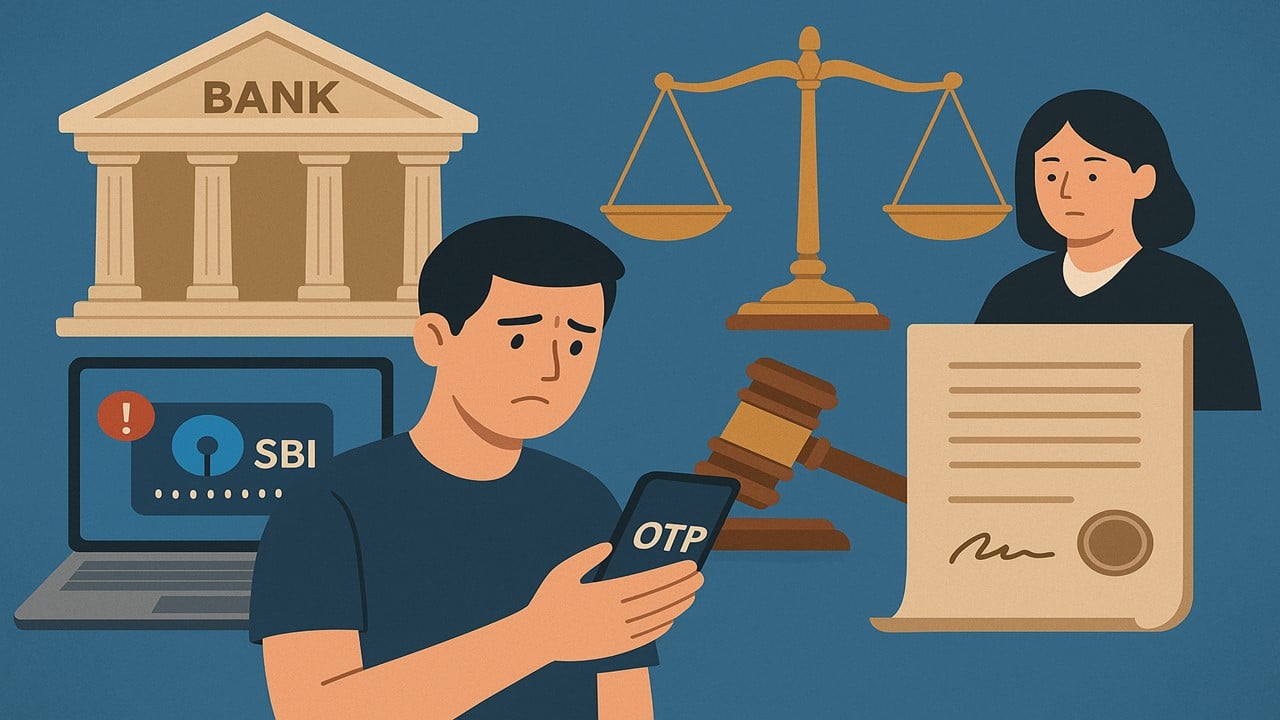
The Supreme Court dismissed an appeal filed by the State Bank of India (SBI), challenging the order of the Gauhati High Court regarding the fraudulent online transactions. The Supreme Court ruled that an online transaction, which was fraudulently made from the bank account of the respondent, Pallabh Bhowmick, was unauthorised, and that SBI was responsible for the loss.
Some online transactions were made from the bank account (State Bank of India) of the respondent, Pallabh Bhowmick, on 18.10.2021, which were unauthorised and fraudulent. The same was reported by the respondent to the bank within 24 hours. However, SBI took no action and argued that the transactions were made through a third-party app, not recommended by the bank.
When the matter reached the Gauhati High Court, it ruled in favour of Pallabh Bhowmick, holding that he was not negligent in any way. The bank was held responsible for the unauthorised and fraudulent transactions. SBI was criticised for not taking action even though the customer reported the fraud promptly. It also cited RBI guidelines, which establish customer liability based on when they report the transactions.
As per the RBI Circular dated 06.07.2017, the customer is not liable if an unauthorised transaction is due to a bank’s negligence or a third-party breach if they report it to the bank on time. Since the SBI could not establish any negligence on the part of the customer, the High Court ruled in favour of the Account Holder. Aggrieved by this order, the Bank filed a Special Leave Petition before the Supreme Court.
The Supreme Court upheld the High Court’s decision, saying that the transactions were fraudulent and that the bank had advanced technology, using which it should have detected and prevented such transactions. The Supreme Court held that the bank should be more vigilant.
The Supreme Court also said that the customer, or the account holder, must be vigilant and make sure that One-Time Passwords (OTPs) are not shared with any third-party app. Based on these findings, the Supreme Court dismissed the petition filed by SBI.