Empowering Citizens: PM Modi’s Blueprint for Next-Gen GST Reforms
Empowering Citizens: PM Modi’s Blueprint for Next-Gen GST Reforms
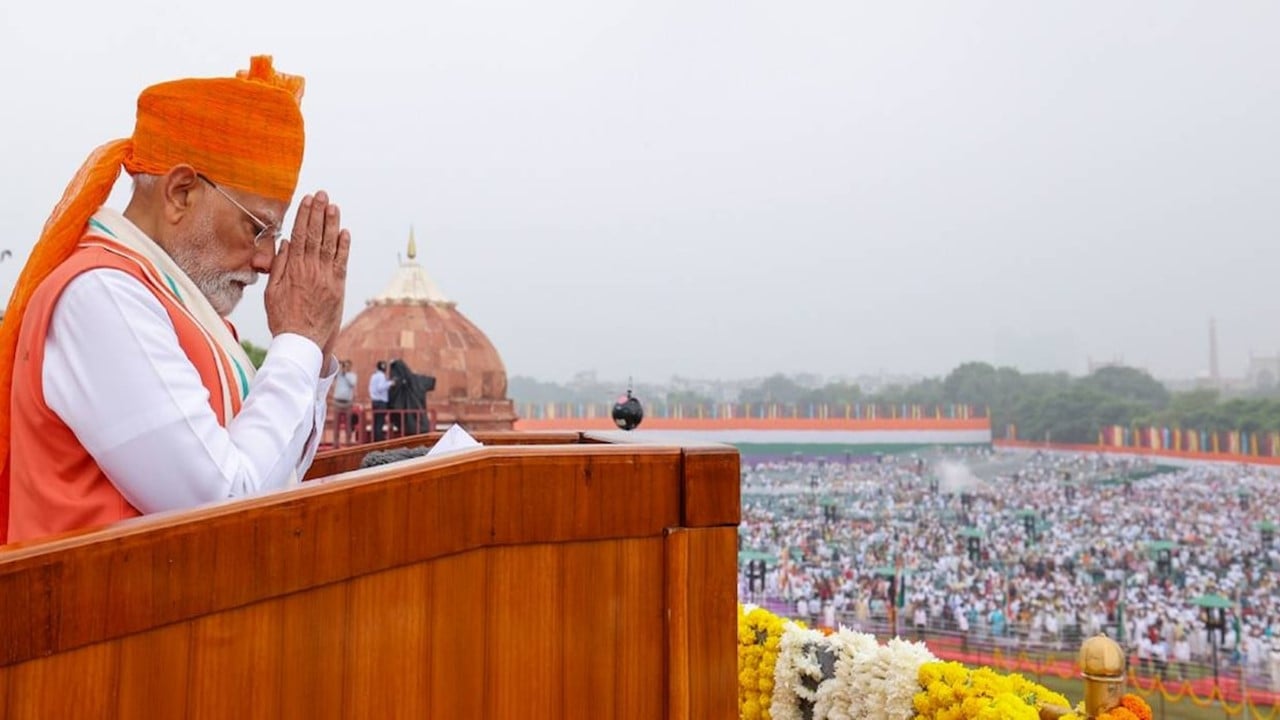
Prime Minister Shri Narendra Modi, in his speech held on the 79th Independence Day, addressed the nation, underlining how the Goods and Services Tax (GST) executed in 2017 is an important reform which has benefited the nation. He added that over the past times India has been performing and transforming but the time has come to move ahead with even more power.
The Prime Minister underlined the significance of the next generation of reforms under GST, which brings relief to the common man, farmers, the middle class and MSMEs. he added that over the past years, the government has undertaken a historic wave of reforms and terminated over 40,000 unnecessary complaints, and recently, over 280 provisions were removed to make the governance simpler and more accessible for every Indian.
The PM also underlined the key achievements:
- Zero tax for annual income up to Rs 12 lakh
- Income tax reform and faceless assessment
- Replacement of old criminal laws with the Bhartiya Nyay Sanhita
To make an “Atmanirbhar Bharat“, the Central Government is suggesting important reforms in GST. This will be concentrated on the following three pillars: –
- Structural reforms
- Rate rationalisation and
- Ease of living
To survey this issue, the Central Government has sent its suggestion on GST rate rationalisation and reforms to the group of Ministers (GoM) established by the GST Council.
Key pillars of the Centre’s Suggested Reforms:
Pillar 1: Structural reforms
The correction of the inverted duty structure to place input and output tax rates so that there is a reduction in the accumulation of input tax credit. This would support domestic value addition. It solves the classification issues to smooth rate structures, simplify compliance processes, and provide greater equity and consistency over sectors. this also provides long-term clarity on rates and policy direction to make industry confidence and support better business plans.
Pillar 2: Rate Rationalisation
This would increase affordability and boost consumption and also make necessary and aspirational goods more accessible to a wider population. and it has a reduction of slabs as it moves towards a simple tax with 2 slabs i.e. standard and merit, and also end of compensation Cess has created fiscal space, providing greater flexibility to align tax rates within the GST framework for long-term sustainability.
Pillar 3: Ease of Living
For small businesses and startups the registration process is seamless, technology-based, and time-bound. It implements pre-filled returns, which helps in reducing manual intervention and terminating mismatches.
The announcement aligns with the Centre’s broader push to make the GST framework simpler, more stable and citizen–friendly.