High Court Strongly Criticises ITAT For Wrongly Dismissing Multiple Appeals on Jurisdictional Ground
High Court Strongly Criticises ITAT For Wrongly Dismissing Multiple Appeals on Jurisdictional Ground
Sahara India Limited has filed multiple writ petitions in the Delhi High Court against the Income Tax Appellate Tribunal (ITAT), Delhi Bench. All the petitions were concerned with similar facts; hence, the court heard them all simultaneously and passed a single judgement for all.
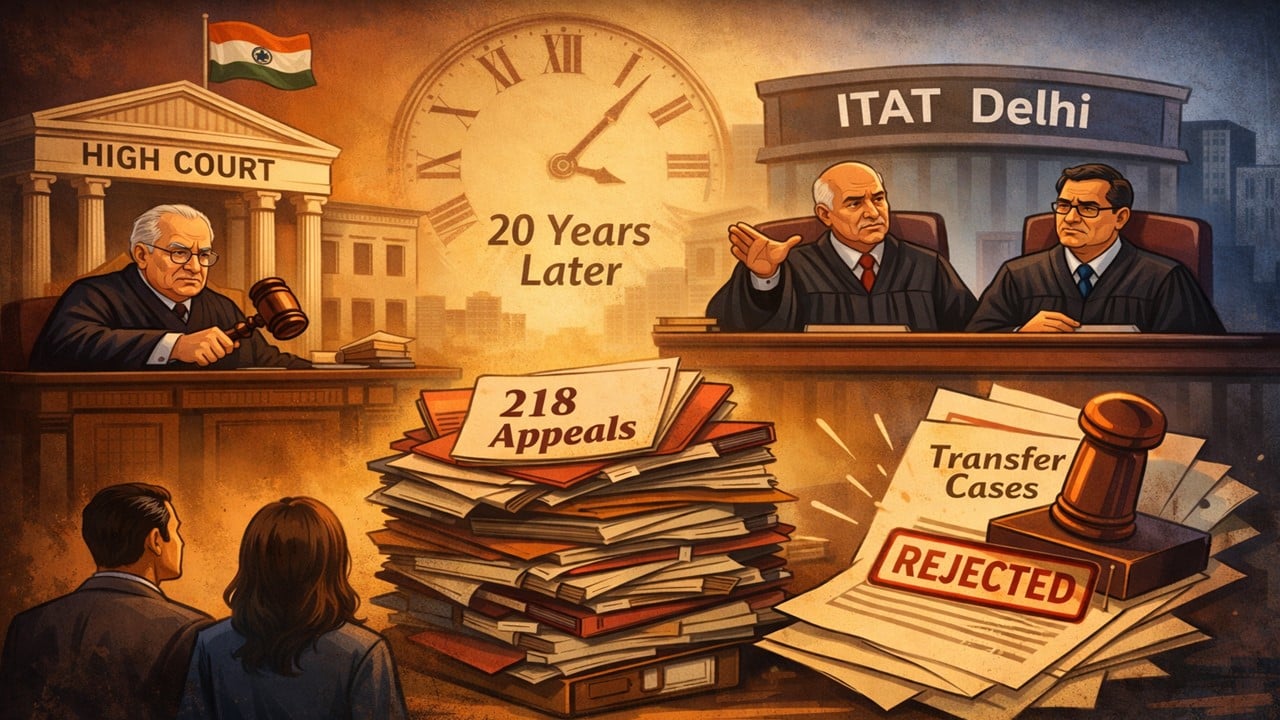
The dispute started when 218 tax appeals of the Sahara Group, originally filed before the ITAT Lucknow Bench, were transferred to the Delhi Bench by an administrative order dated August 17, 2006, of the President of the Tribunal for administrative convenience. Some appeals were left pending in the Delhi bench for nearly two decades.
The ITAT Delhi Bench dismissed these appeals through an order dated November 20, 2024, saying it did not have territorial jurisdiction because the Assessing Officer (AO) was located in Lucknow. The tribunal, in support of its action cited an earlier judgement of the Supreme Court titled PCIT v. M/s ABC Papers Ltd.,
Now, Sahara India has challenged this order dated November 20, 2024, before the Delhi High Court, arguing that once the appeals are officially transferred by the Tribunal President, the Delhi Bench could not reject them on jurisdictional grounds. The company also stated that neither party had raised any objection regarding jurisdiction.
When the court analysed and examined the arguments of the petitioner company, it found ITAT’s approach incorrect. The court noted that the tribunal was completely aware of the fact that the appeals were transferred to it through a valid administrative order; hence, it has no authority to dismiss them. However, still, if the ITAT believed that it had lacked jurisdiction, it should have referred the matter back to the President for appropriate transfer instead of dismissing all the appeals after about two decades.
The court strongly criticised this wrong behaviour of the tribunal and further clarified that the cited Supreme Court judgement was also not applicable here because it dealt with a different issue related to High Court jurisdiction. In conclusion, the Delhi High Court set aside the ITAT’s orders and directed the tribunal to re-decide all the appeals on merit.